|
|
|
|
|
|
|
|
|
 |
CONTACT EMAIL KILLERCOP @ KILLERCOP.COM |
|
||||||
 |
 |
 |
|
 |
|
|
||
 |
|
|||||||
|
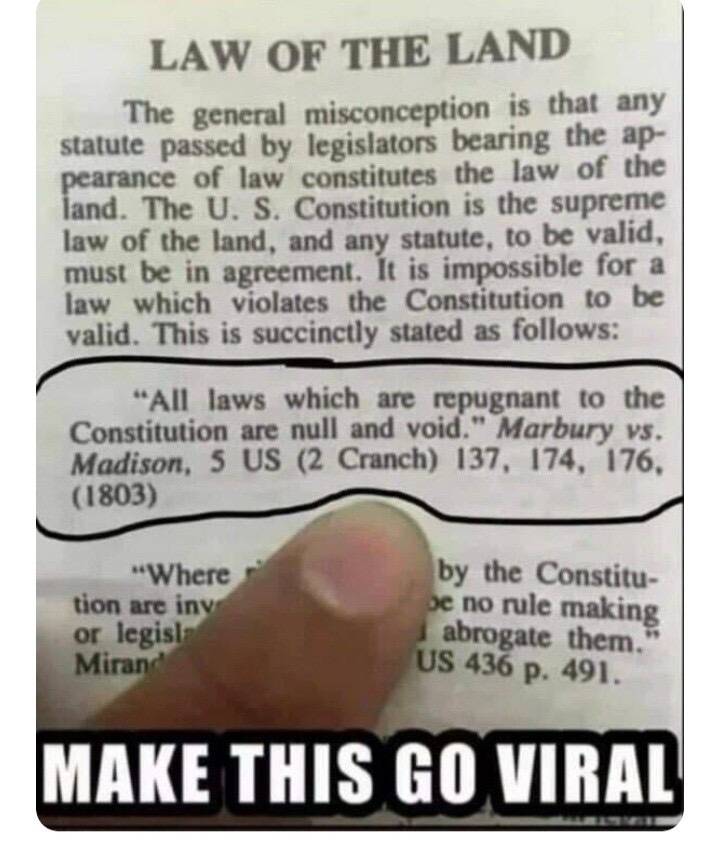
What Are Words For, When No One Listens Anymore? When No One Is Allowed To Hear You When You Scream. All government officers of the United States, including the President, the Justices of the Supreme Court, and all members of Congress, pledge first and foremost to uphold the Constitution. These oaths affirm that the rule of law is superior to the rule of any human leader.[22] At the same time, the federal government does have considerable discretion: the legislative branch is free to decide what statutes it will write, as long as it stays within its enumerated powers and respects the constitutionally protected natural rights of individuals. Likewise, the judicial branch has a degree of judicial discretion,[23] and the executive branch also has various discretionary powers including prosecutorial discretion. Scholars continue to debate whether the U.S. Constitution adopted a particular interpretation of the "rule of law", and if so, which one. For example, Law Professor John Harrison asserts that the word "law" in the Constitution is simply defined as that which is legally binding, rather than being "defined by formal or substantive criteria", and therefore judges do not have discretion to decide that laws fail to satisfy such unwritten and vague criteria. Law Professor Frederick Mark Gedicks disagrees, writing that Cicero, Augustine, Thomas Aquinas, and the framers of the U.S. Constitution believed that an unjust law was not really a law at all.
LIKE WHEN A DOCTOR IS NOT REALLY A DOCTOR. AND A JUDGE IS CRAZY. OR NOT EVEN A JUDGE WITH AN OATH OF OFFICE. SEE FAQ1 and FAQ2 FOR MORE ON THE LATTER. "Only one tribunal ever adopted a practice of forcing counsel upon an unwilling defendant in a criminal proceeding. The tribunal was the Star Chamber."-U.S. v Faretta, 422 U.S. 806 (1975) REASONABLE DOUBT DIRTY SECRETS AND MENTAL TORTURE TREATMENTS TO RESTORE YOUR MIND. (c) 1995-2026 |
RULE OF LAW OR RULE OF A TYRANT? A.K.A. MY BUDDY IS A GOD. BUT WAIT, THERE IS MORE! Many individuals and organizations have tried to come up with working definitions which provide both a theoretical and pragmatic accuracy. The United Nations defines the rule of law as: A principle of governance in which all persons, institutions and entities, public and private, including the State itself, are accountable to laws that are publicly promulgated, equally enforced and independently adjudicated, and which are consistent with international human rights norms and standards. It requires, as well, measures to ensure adherence to the principles of supremacy of law, equality before the law, accountability to the law, fairness in the application of the law, separation of powers, participation in decision-making, legal certainty, avoidance of arbitrariness and procedural and legal transparency. [18] The World Justice Project, an organization specializing in the promotion of Rule of Law, bases its definition as, consisting of 16 factors and 68 sub-factors, organized under the following set of four principles, or bands:[19] 1. The government and its officials and agents are accountable under the law; Suspicion that viewpoint discrimination is afoot is at its zenith when the speech restricted is speech critical of the government," Ridley v. Mass. Bay Transp. Auth., 390 F.3d 65, 86 (1st Cir. 2004) FILE A COMPLAINT
TO PURCHASE KILLERCOP.COM™ EMAIL SALES @ KILLERCOP.COM (c) 1995-2026 | |
||||||
|
|
|||||||